
Setting Our Sights on Summer
As the season kicks off, we're bookmarking some intriguing beach reads and reflecting on our Fellow's research into Charlottesville's beloved trail system.


Issue No. 2
IN THIS ISSUE
BUILDING: Villa E-1027—Eileen Gray and Jean Badovici
READING: The Three-Deckers of Dorchester—Arthur J. Krim
WORKING: Leopold Wehner: 2025 Erwin-Ramsey Fellow
BUILDING
Villa E-1027
Eileen Gray and Jean Badovici (Roquebrune-Cap-Martin, FR)
BY: TARO MATSUNO
“To see how the house could be the living shell of those inside, formed by them.
House like a mollusk. Made of liquid stone.” — Jane Allison
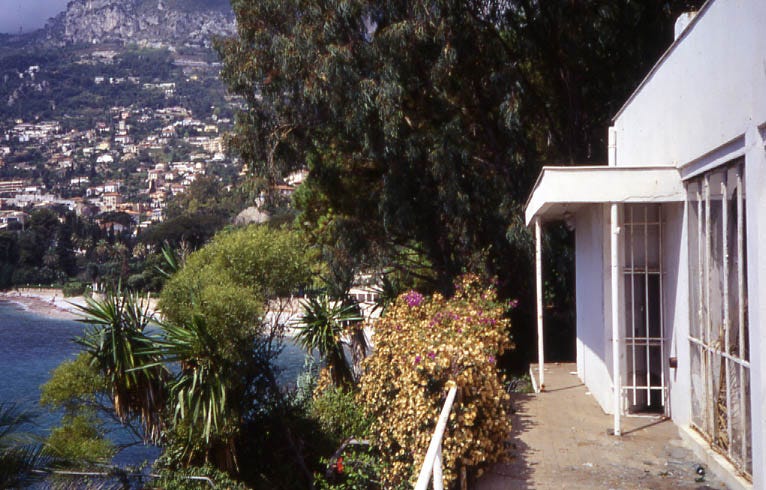
For everyone coming or going to the shore: Eileen Gray’s Villa E-1027 is a Building but it’s also a Reading. UVA author Jane Allison’s Villa E captures a fictionalized story of Eileen Gray’s relationship with her house, and her conflict with modernist giant Le Corbusier.

Her creation provoked jealous obsession in Corbusier, who allowed it to be mistaken as his own work, defaced the walls with his paintings, and built a cabin overlooking the home. He would later drown in the waters near the house in 1965.
Allison’s novel captures Grey’s joy of creation, and follows her into the dark recesses of memory, like the deep shadows after too long in the sun.
Beatriz Colomina’s seminal 1993 paper on the episode, War on Architecture
Architectural Photographer Mary Gaudin’s study of the house
Jane Allison in LitHub
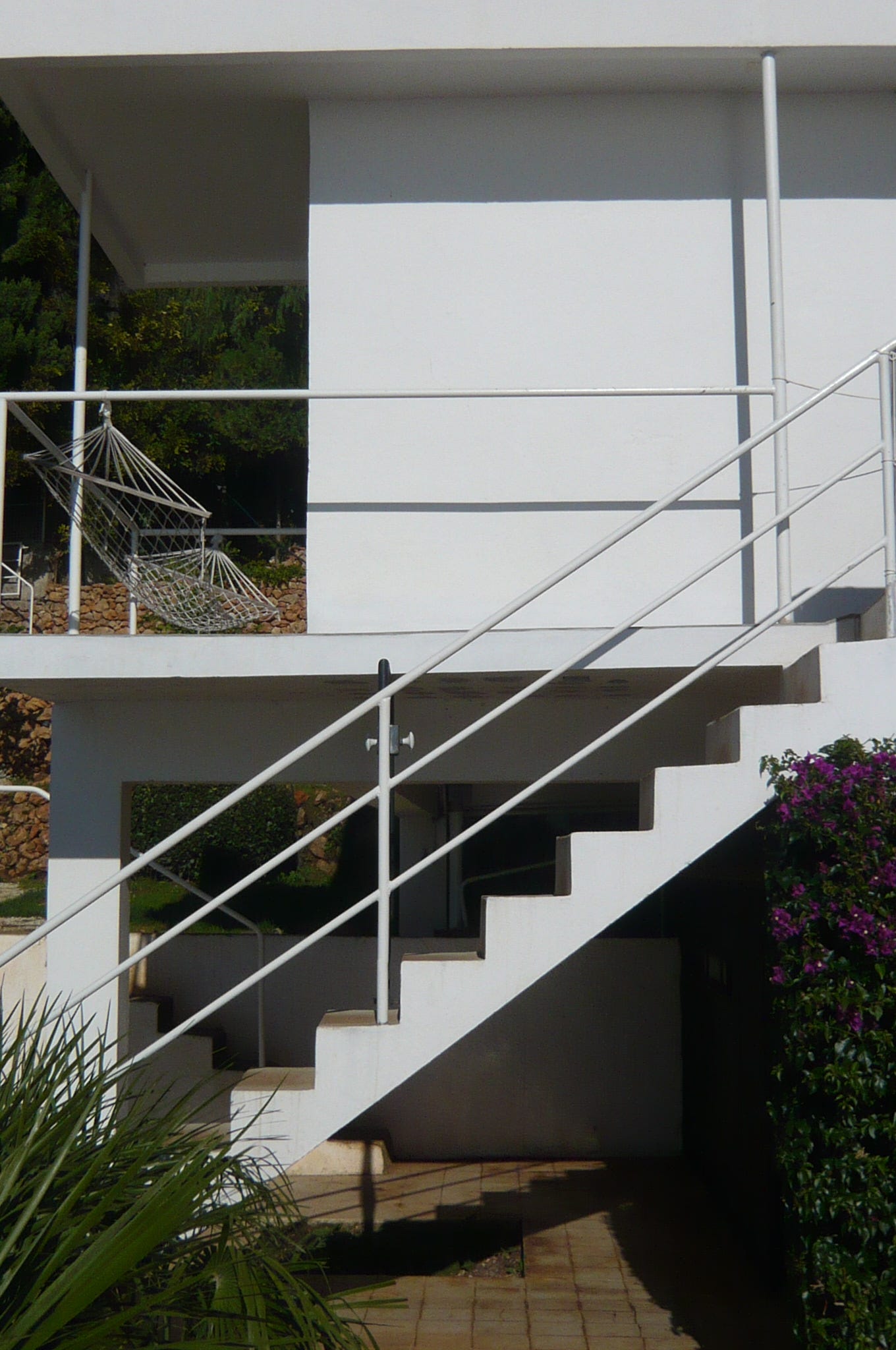
Photos post-restoration from Cap Moderne—schedule a tour if you’re nearby!
READING
The Three-Deckers of Dorchester
Arthur J. Krim, Boston Redevelopment Authority
BY: TARO MATSUNO
We’ve been working on a side project in the office around infill development in Charlottesville. Not sure if this is more or less relevant given the recent voiding of the new zoning (as always I look to Sean Tubbs on the matter).
I've been doing some GIS analysis on all of the parcels in the City. We can look at each lot by physical dimensions and quickly assess the development types that work at a very high level.
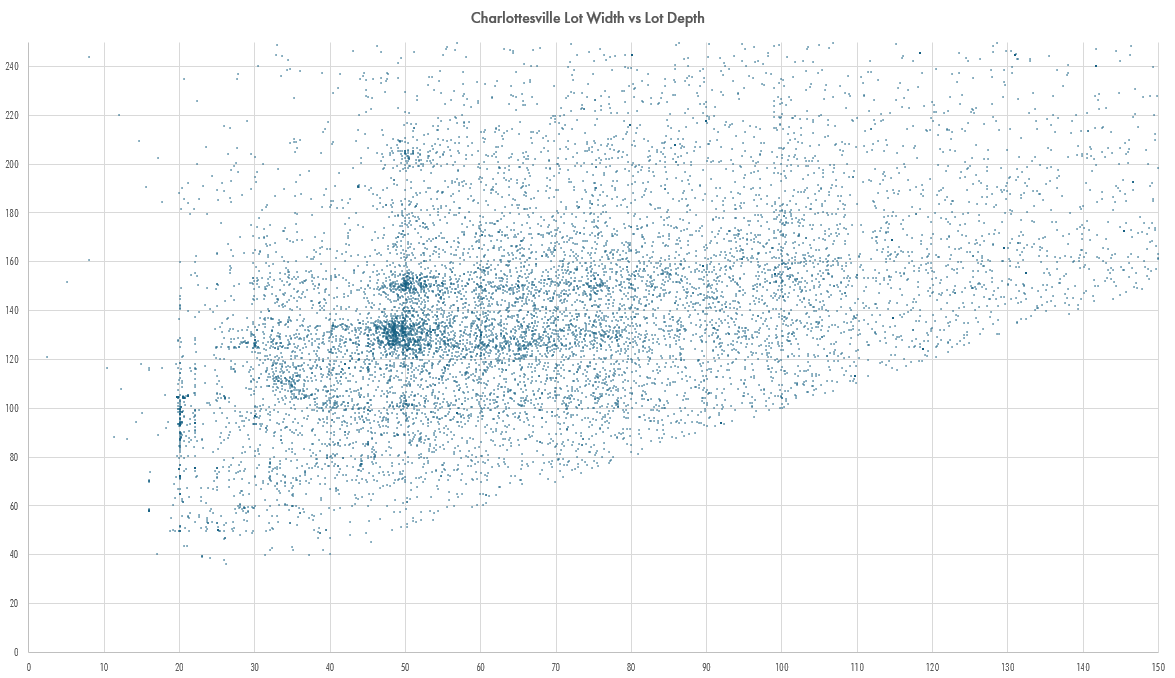
We've also been looking at the types of units that might be feasible based on the width of the lot.
I'm from Massachusetts, I lived in Somerville for a time, and the triple decker is an infill multifamily building type near and dear to my heart. My research brought me to this publication from the 70s, commissioned by the City of Boston.
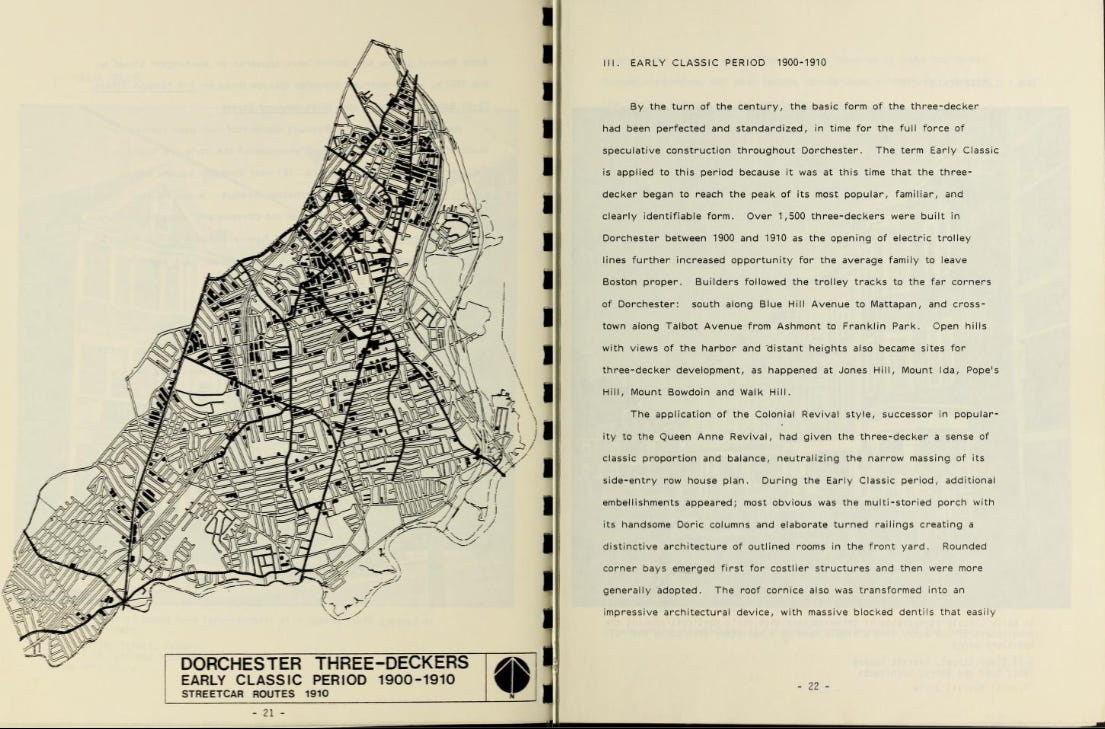
It’s a great piece of urban architectural history with some cool pre-Adobe maps and diagrams. Appreciate it in all its glory on the Internet Archive.
WORKING
Leopold Wehner: 2025 Erwin-Ramsey Fellow
BY: CANDACE CABRAL
Each year, the start of summer at BRW is marked by the selection of a Fellow. Since 2019, the Erwin-Ramsey Fellowship has encouraged local architecture students to use their skills to meet the needs of our community through a self-directed research project. This summer’s fellowship and concluding presentation (during a historic heatwave) is one we won’t soon forget!
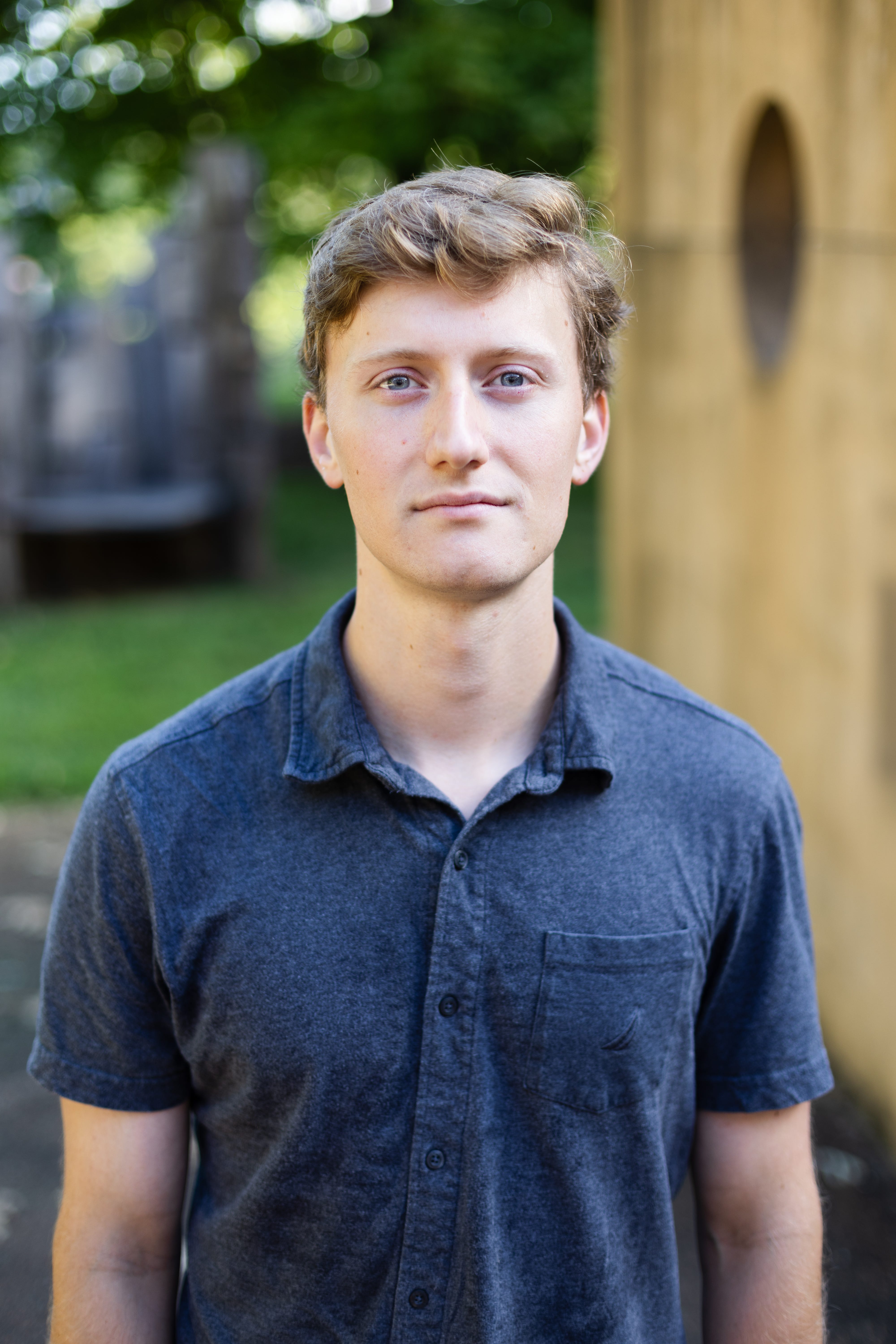
Leopold Wehner was selected from an incredibly competitive pool of applicants. He’s currently preparing to enter the final year of his Masters program at UVA’s A-School.
Leo spent the month of June at our studio assessing the potential of Charlottesville’s unique and complex system of recreation trails—what he calls “a half-wild, half-urban public backyard”—for engagement with the community it encircles. He worked closely with the Rivanna Trails Foundation to propose an expansion of the public interface with Charlottesville's trails by revamping public-facing maps and wayfinding, documenting how the trails interact with the region’s daily life, and creating a vision for the system’s future.
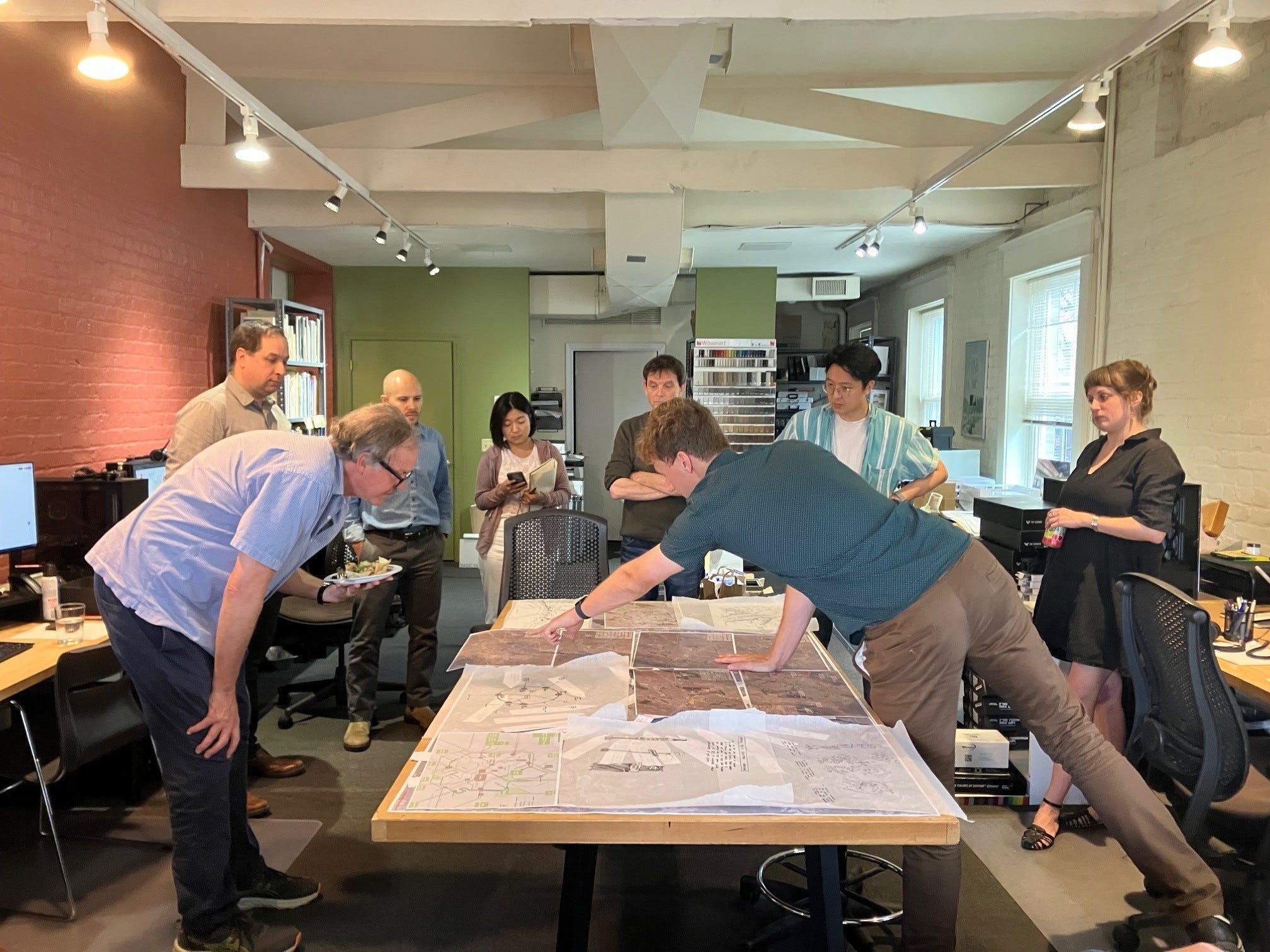
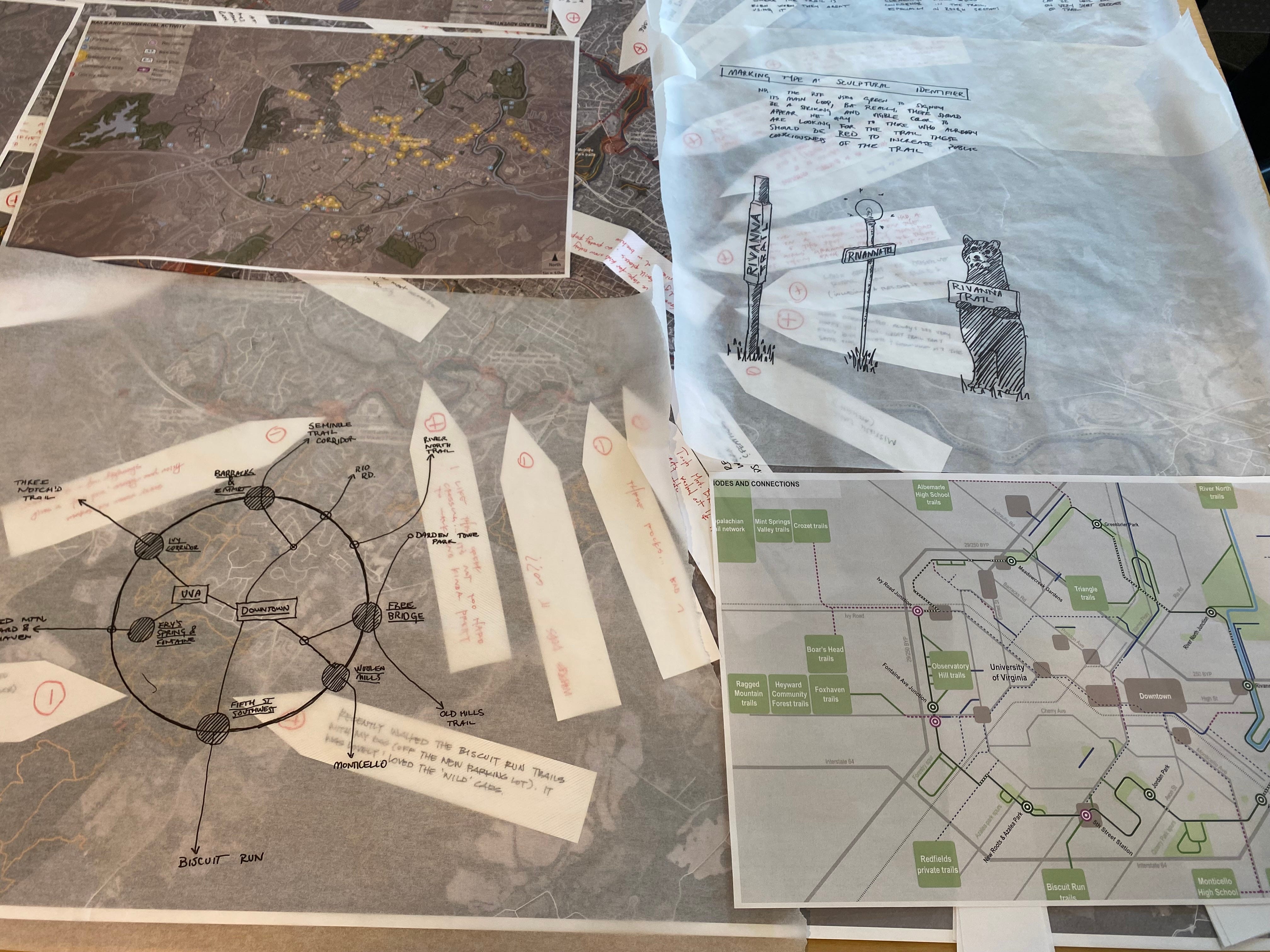
Leo appropriately chose to hold his final presentation at Charlottesville’s only trail-facing business, the Rivanna River Company. Sheltered under shade trees from the intense heat, Leopold led an engaging and optimistic conversation about the possibilities for the future of Charlottesville’s one-of-a-kind trail system.
The evening concluded with a dip in the nearby Rivanna River to cool off (a new annual tradition for the Fellowship program, perhaps?).
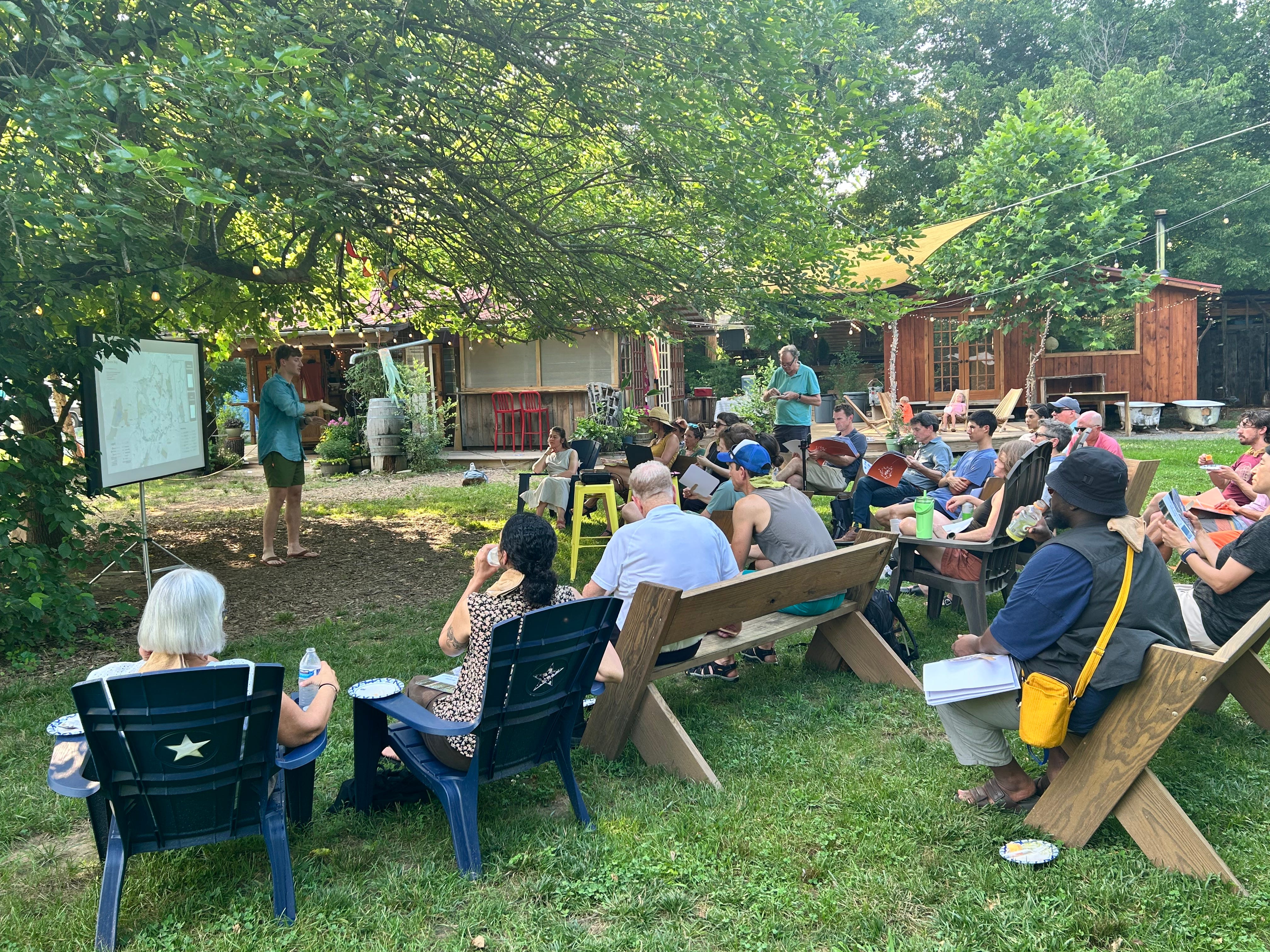
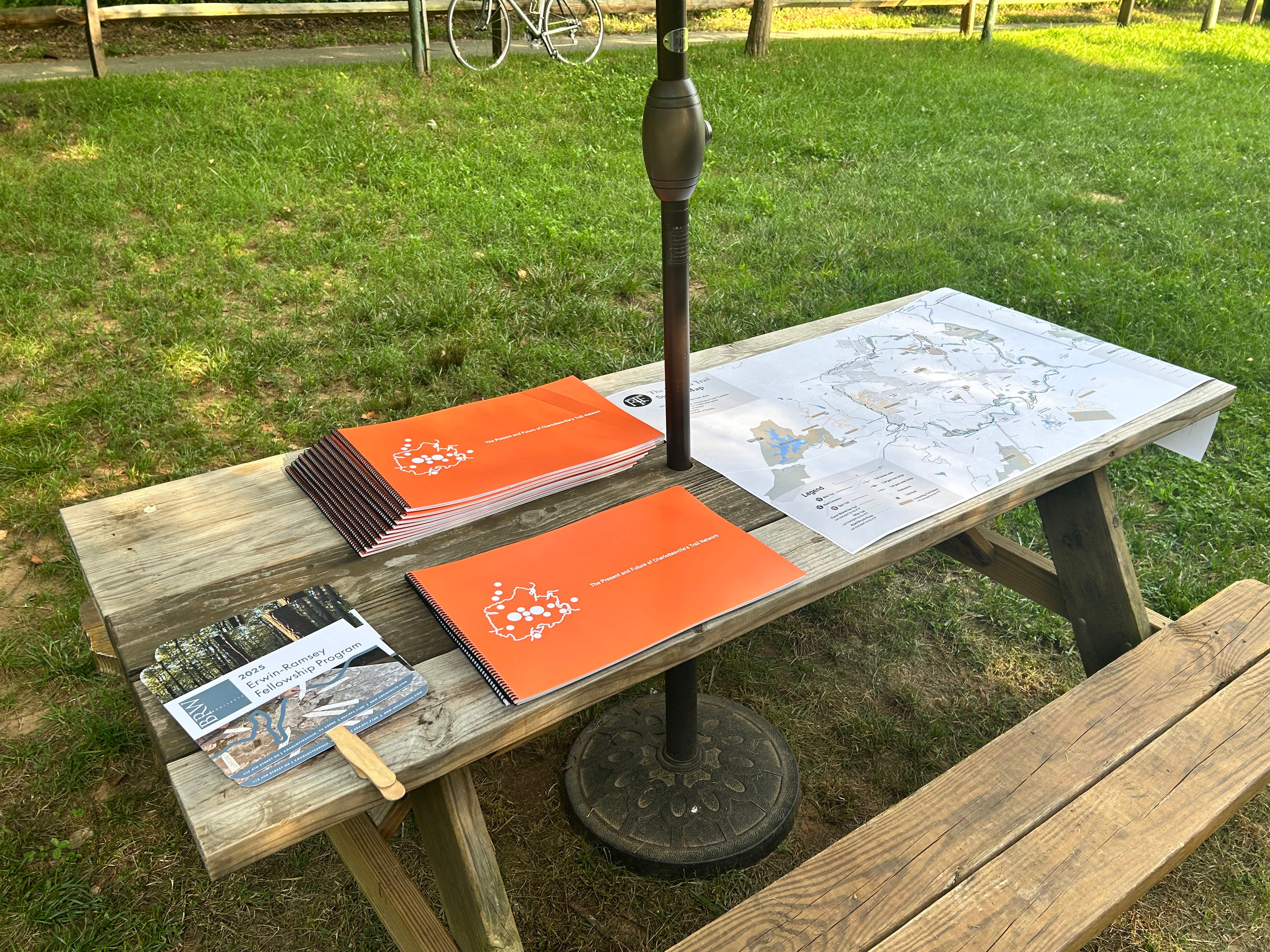
A full recording of Leopold’s presentation will be available on our website soon. In the meantime, we invite you to learn more about the Erwin-Ramsey Fellowship program and past participants. Applications for 2026 open in the Spring.