
Structures that Shape Us
Religious institutions, educational facilities, and art studios—spaces where tradition, ambition, and creativity intersect.
Issue No. 7
IN THIS ISSUE
BUILDING: Congratulations, Congregation Beth Israel!—Winner of AIA Virginia’s 2025 Test of Time Award
READING: Architecture, Debt, and the University —Len Gutkin
WORKING: Broadaxe Art Studio—Small Scale, Big Vision
BUILDING
Congratulations, Congregation Beth Israel!
Winner of AIA Virginia’s 2025 Test of Time Award
BY: CANDACE CABRAL
Congregation Beth Israel has been selected as the 2025 recipient of AIA Virginia’s prestigious Test of Time Award. Each year, this honor is bestowed upon a structure at least 25 years old that continues to serve its original purposed while maintaining its architectural integrity.
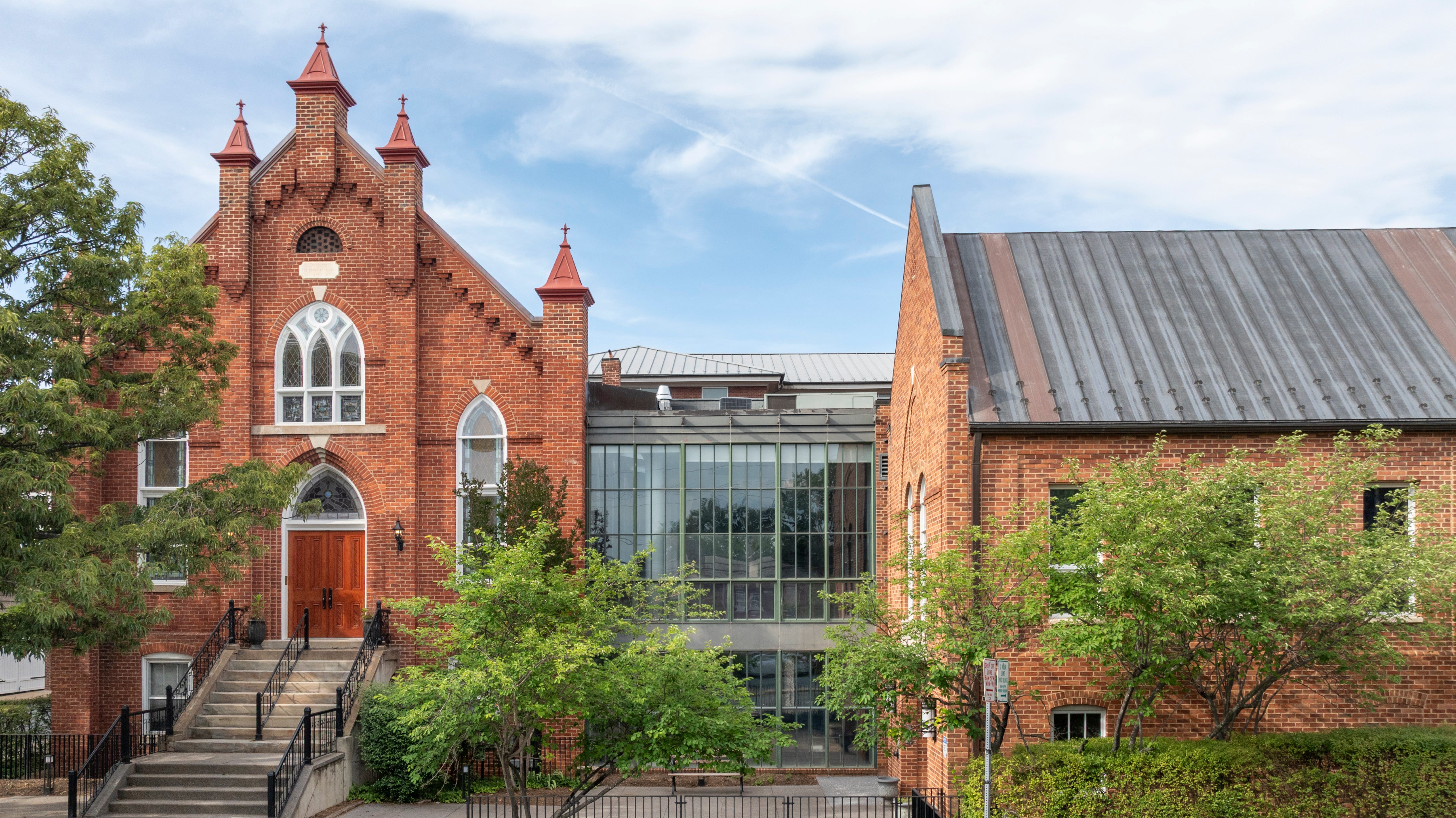
Founded in 1881, Congregation Beth Israel is the longest continually operating synagogue in Virginia—the tenth oldest in the United States. By the early 1990s, the congregation had outgrown their historic downtown site, adjacent to Court Square. Rather than relocate, the congregation made a bold decision: remain in the heart of downtown Charlottesville and invest in an addition that would honor their heritage while preparing for the future.
In the early 1990s, the synagogue underwent a transformative expansion to accommodate their rapidly growing congregation. Determined to remain at their location in the heart of the city, adjacent to the historic Court Square, the congregation chose to add a 14,000 square-foot modern extension to its original 7,000 square-foot 19th-century sanctuary.
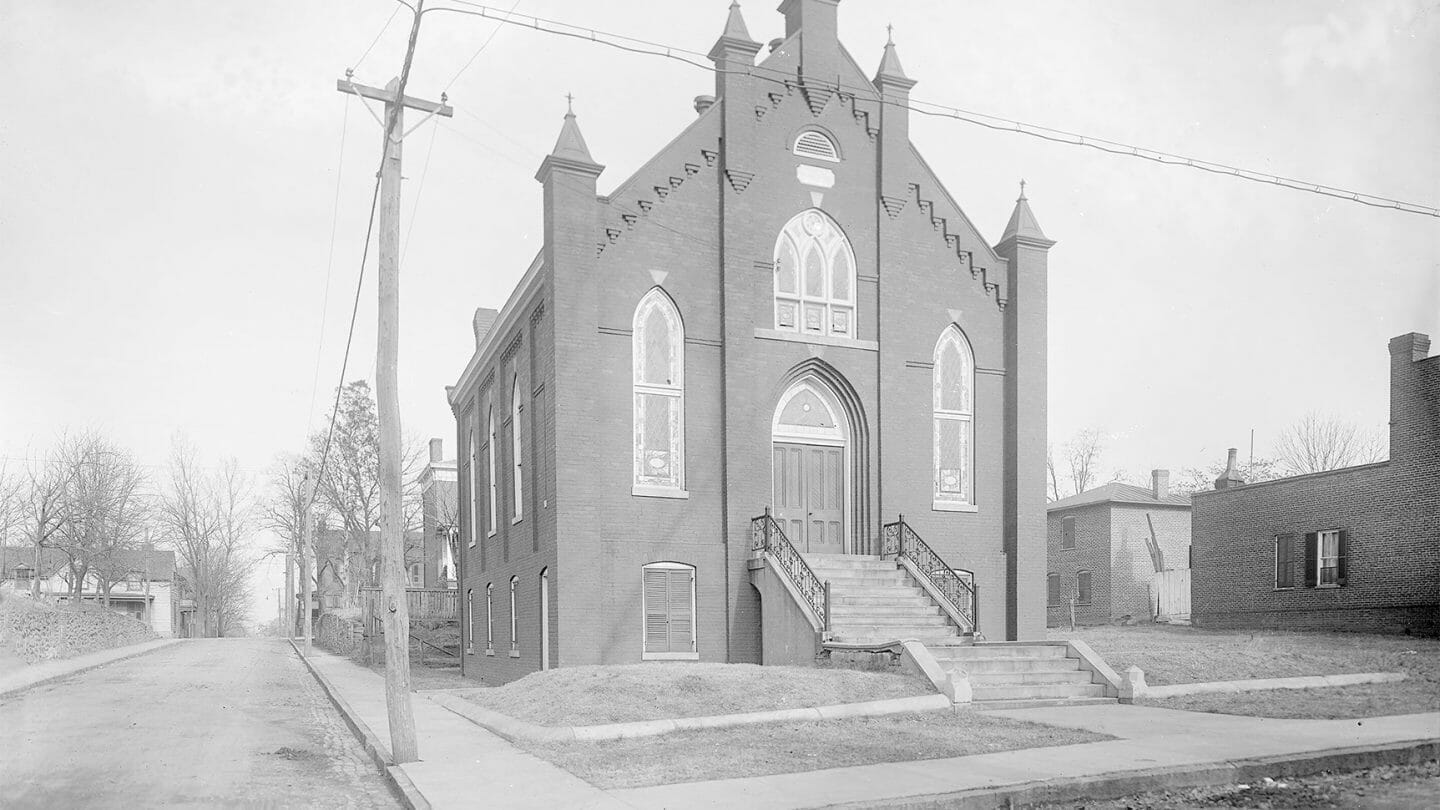
The result was a transformative 14,000-square-foot addition, designed in collaboration between brwarchitects and the congregation’s design committee, which seamlessly integrates with the original 7,000-square-foot 19th-century sanctuary. The design strikes a thoughtful balance: preserving the dignity of the historic structure while enhancing its presence in the city.
Highlights of the project include a new chapel—inspired by the detailing of the original sanctuary—that connects to the fellowship hall and preschool by way of a contemporary two-story steel and glass window. A new street-facing courtyard reinforces this link between old and new structures while also offering the broader community a pocket-sized urban park.
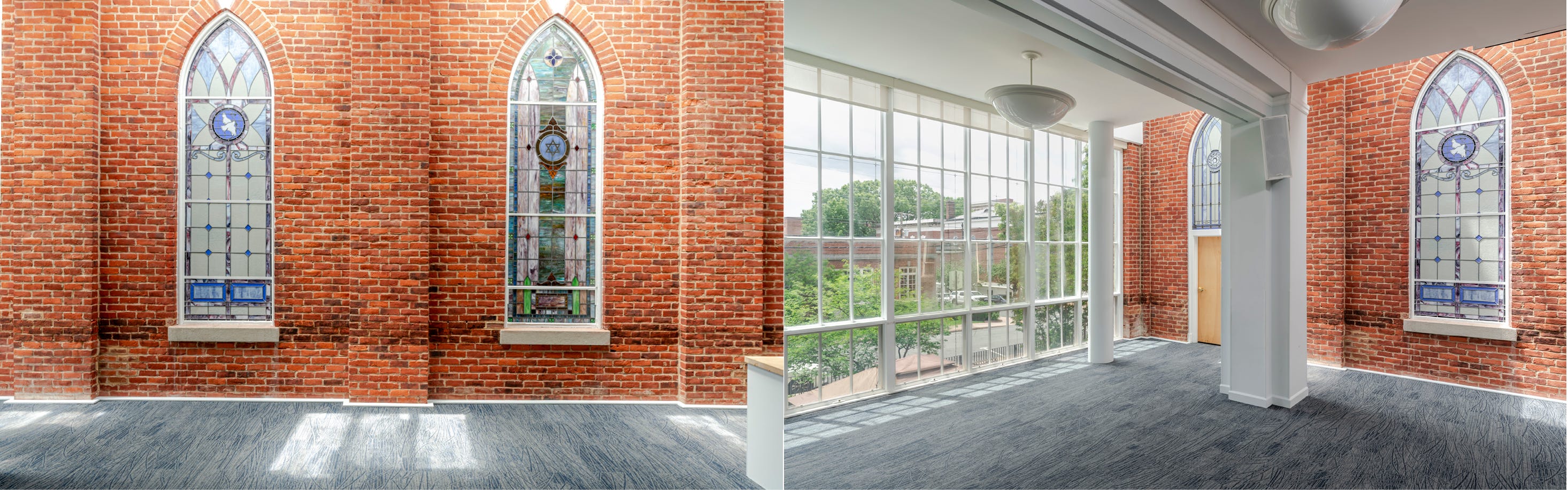
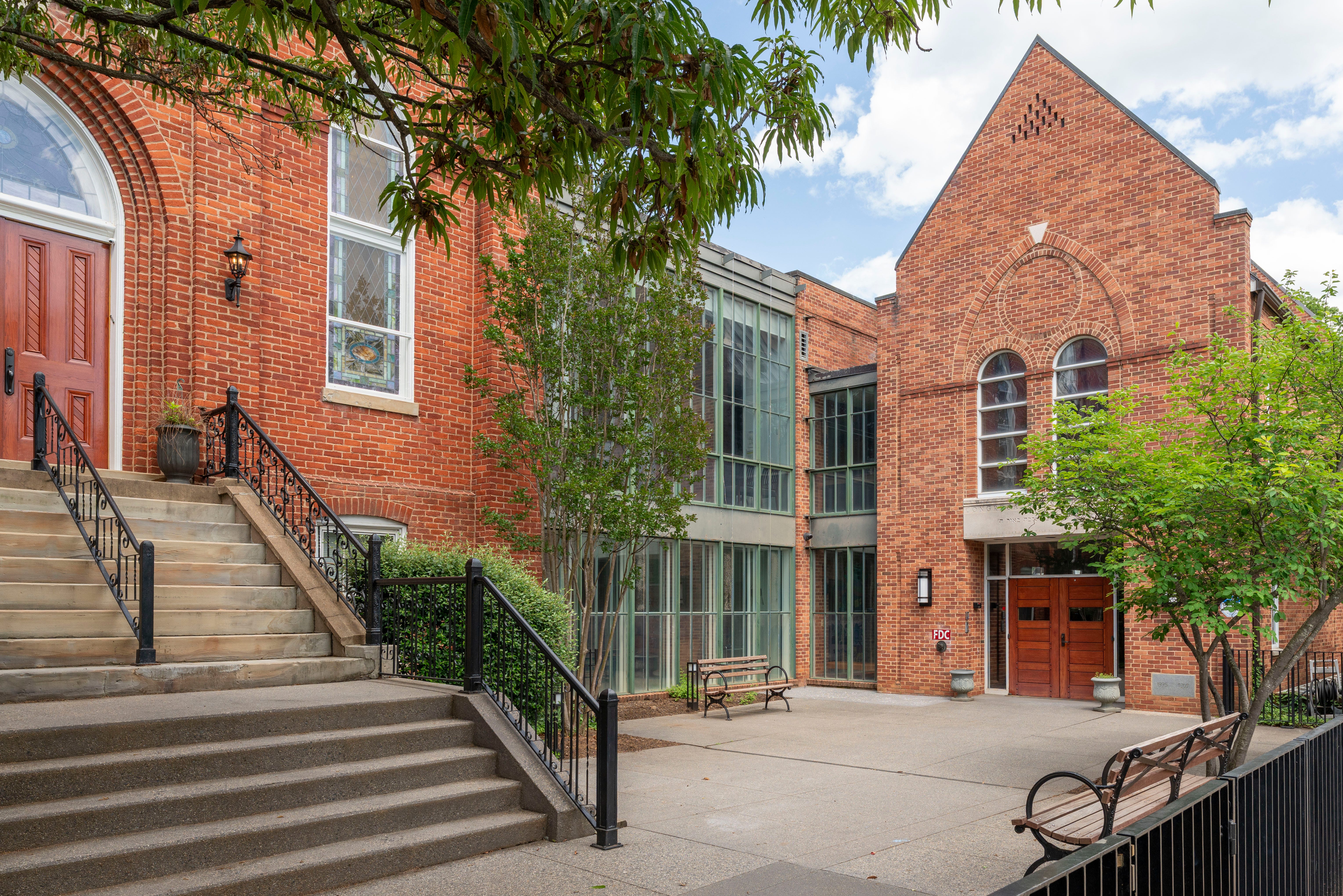
Over the past three decades, this thoughtful integration of tradition and modernity has strengthened congregational life, enriched the neighborhood’s character, and embodied the synagogue’s values of resilience, openness, and continuity.
Congregation Beth Israel will be presented with their award at the Visions for Architecture gala in Richmond this November.
READING
Architecture, Debt, and the University
Len Gutkin
BY: TARO MATSUNO
This back to school season brings hard times to University of Chicago from the Chronicle of Higher Education. My alma mater is planning to consolidate its humanities departments, cut language programs, and freeze admissions to many PhD programs for 2026-27. Many universities are currently in turmoil, but at UChicago the underlying story is about architecture, real estate, and debt.
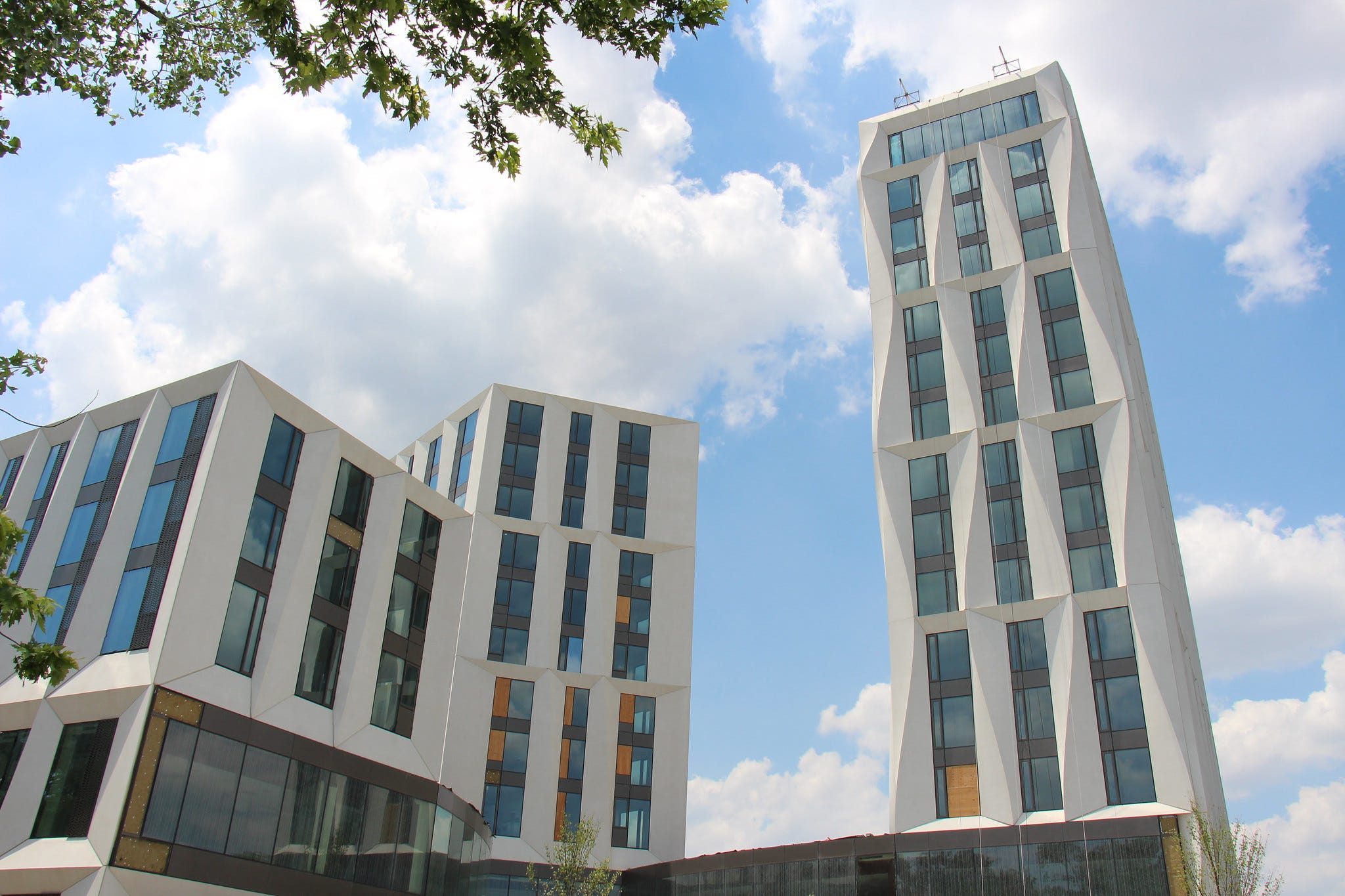
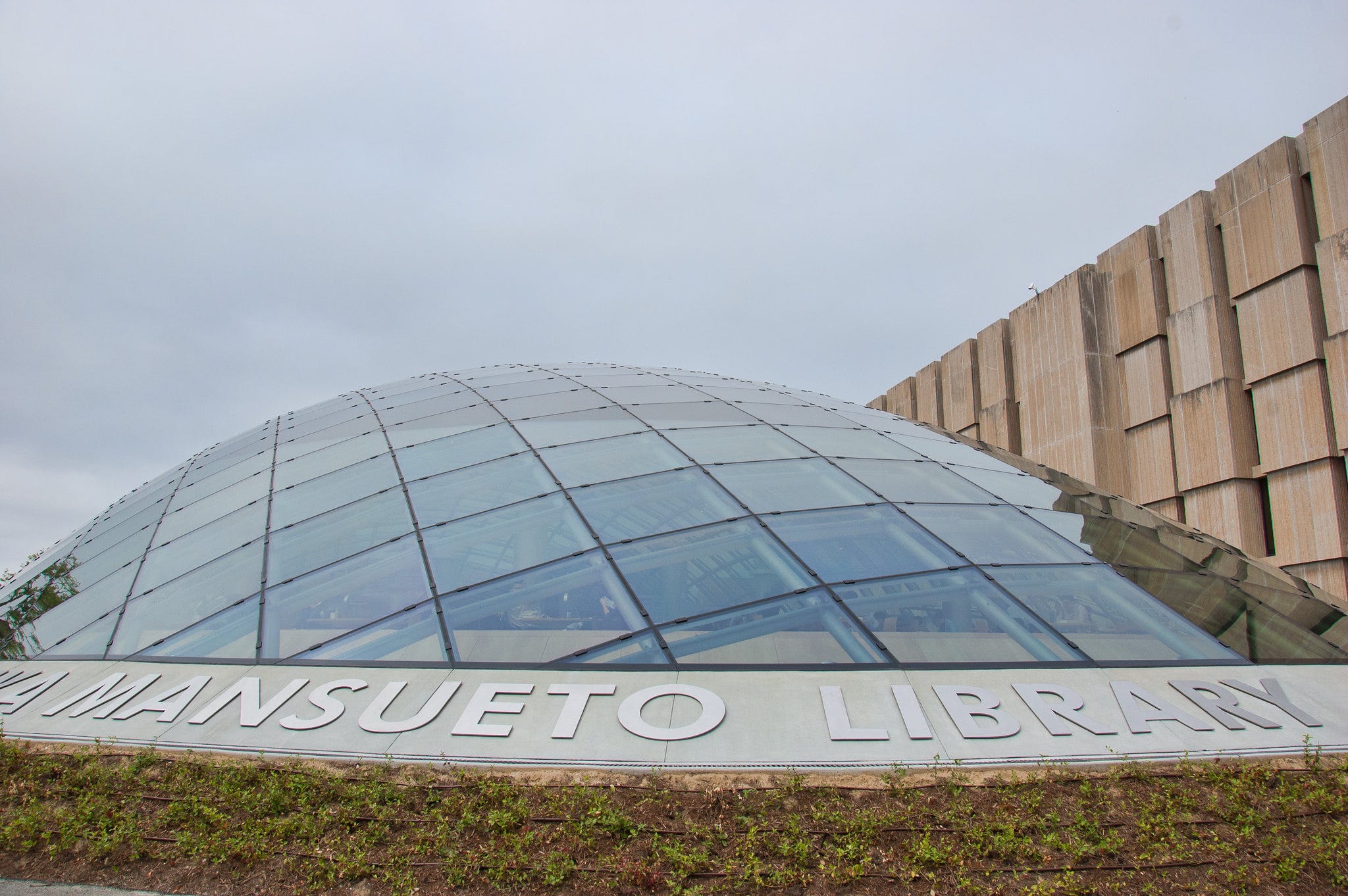
During previous President Robert Zimmer’s 15 year tenure, the University underwent a building spree with a murderer’s row of starchitects - in my four years they included a robotic library under a glass dome by Helmut Jahn, a 15-story dormitory by hometown hero Jeanne Gang, and an arts tower by Obama Library designers Tod Williams Billie Tsien Architects.
While university critics disagree on much, they do agree that the debts are significant, and that business logic is dominating the modern university. The irony is that in some ways the business logic was not developed enough - how did the University plan to cover the debt it created? Real estate development is risky in the best of circumstances and vulnerable to downturns and changes in interest rate. In UChicago’s case, it comes also at the expense of the humanities and the liberal arts tradition.
The rundown of the situation by Len Gutkin in the Chronicle of Higher Education.
Prof. Clifford Ando’s fiery piece on the situation in Compact.
Prof. Brian Leither throws cold water on Ando’s piece in “the world’s most popular philosophy blog”
WORKING
Broadaxe Art Studio
Small Scale, Big Vision
BY: CANDACE CABRAL
We recently completed a small residential project off Broadaxe Road, just southwest of Crozet. In 2022, we designed a home on the property that included a cozy painting nook off the living room. As the client’s practice expanded, she realized she needed more space and invited us back to create a freestanding studio tailored to her evolving needs.
At just 631 square feet, this mini-workshop is the firm’s smallest project in recent memory. Despite its modest footprint, the project came with a surprising set of design challenges.
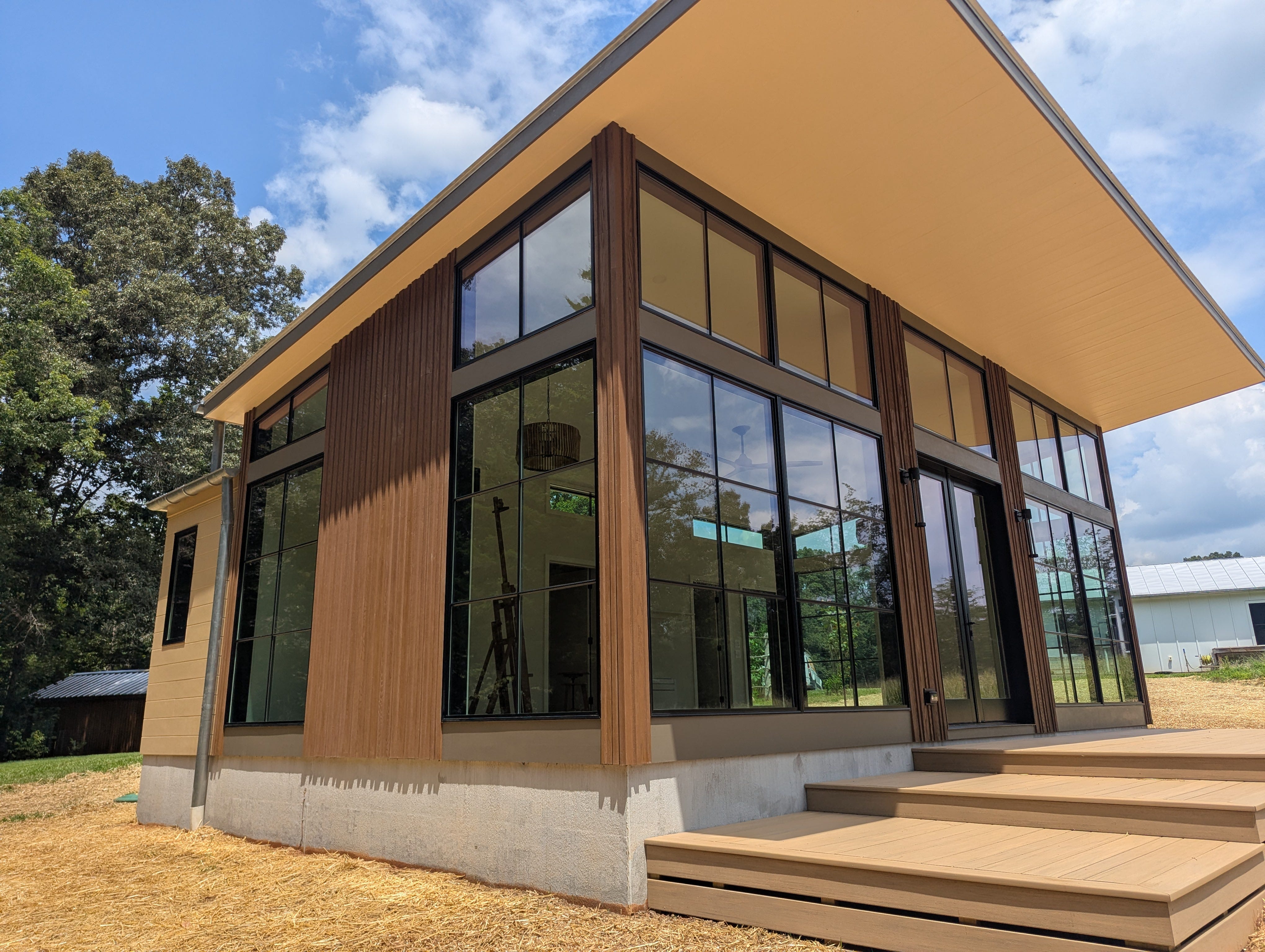
Senior Designer Isaac Miller led the effort from concept through completion. One of his first hurdles was determining the ideal orientation of the structure on the site. The client prioritized two key elements: abundant natural light for painting, and uninterrupted views of the surrounding landscape. It was equally important that the new studio not interfere with sightlines from the main house.
The solution was a south-facing orientation, a tricky choice for light control. To temper the strong summer sun, Isaac designed an oversized roof extension on the south side and introduced a north-facing clerestory. The underside of the roof, finished in white EPDM, bounces and diffuses light deeper into the space.
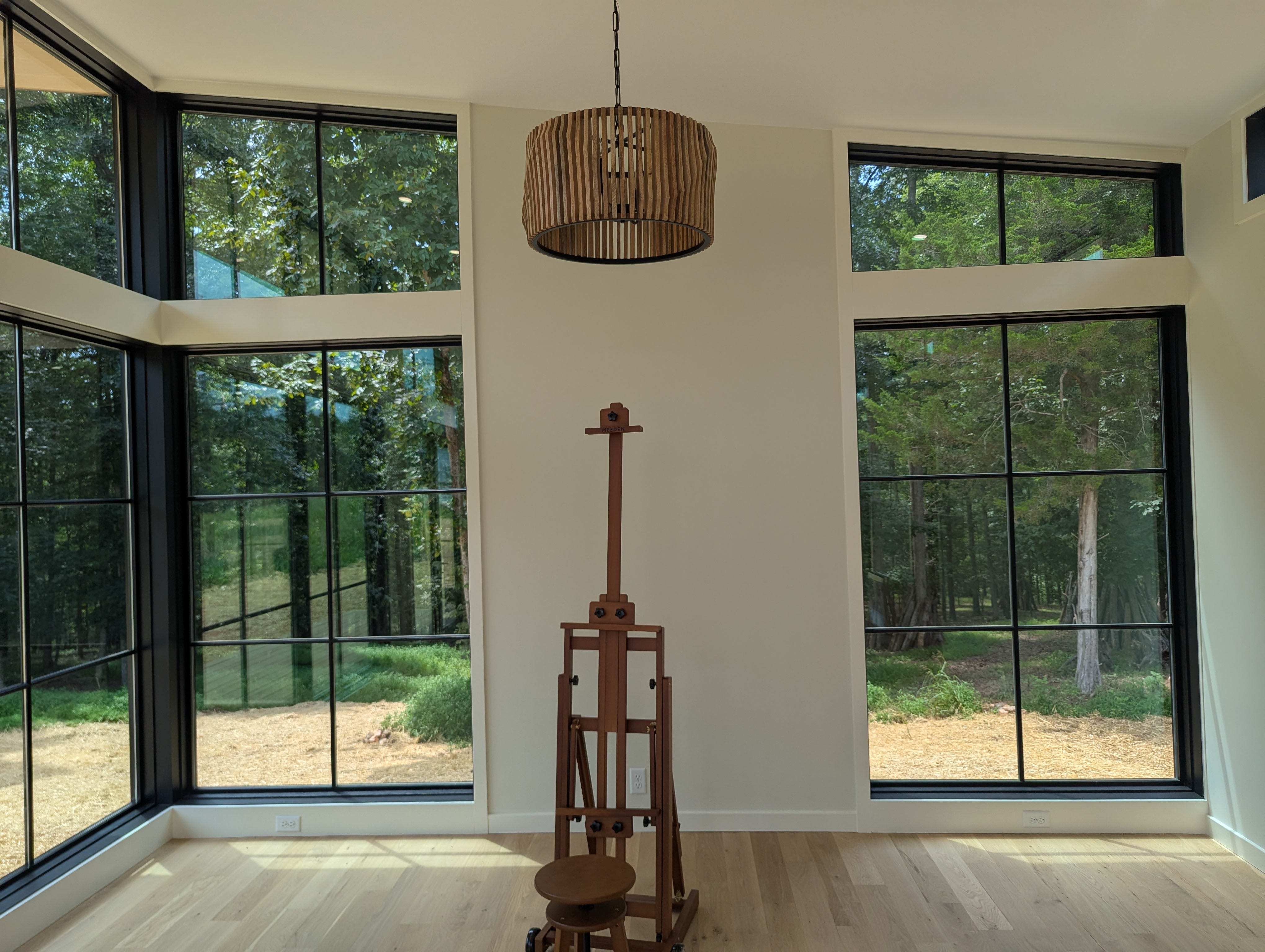
Set at the edge of the property, the studio sits perpendicular to the main house, creating a partial view from the main house that balances privacy with intrigue. Floor-to-ceiling windows on three sides bathe the interior in shifting daylight, making it an ideal environment for painting. A compact bath adds convenience without disrupting the creative flow.
With construction complete, the studio is ready to support our client’s next chapter of work. We look forward to seeing it filled with her art and to arranging professional photography of the space in use—expected Spring, 2026.