
Swapping Sketchbook for Boots
Learning architecture from the ground and gravel, from new legislation to the urban block


Issue No. 20
IN THIS ISSUE
BUILDING: SFJ6 - MARMOLBRAVO
READING: The Virginia Legislative Information System
WORKING: Externship Reflections by Philippe Hempel
BUILDING
SFJ6
Marmolbravo
BY: TARO MATSUNO
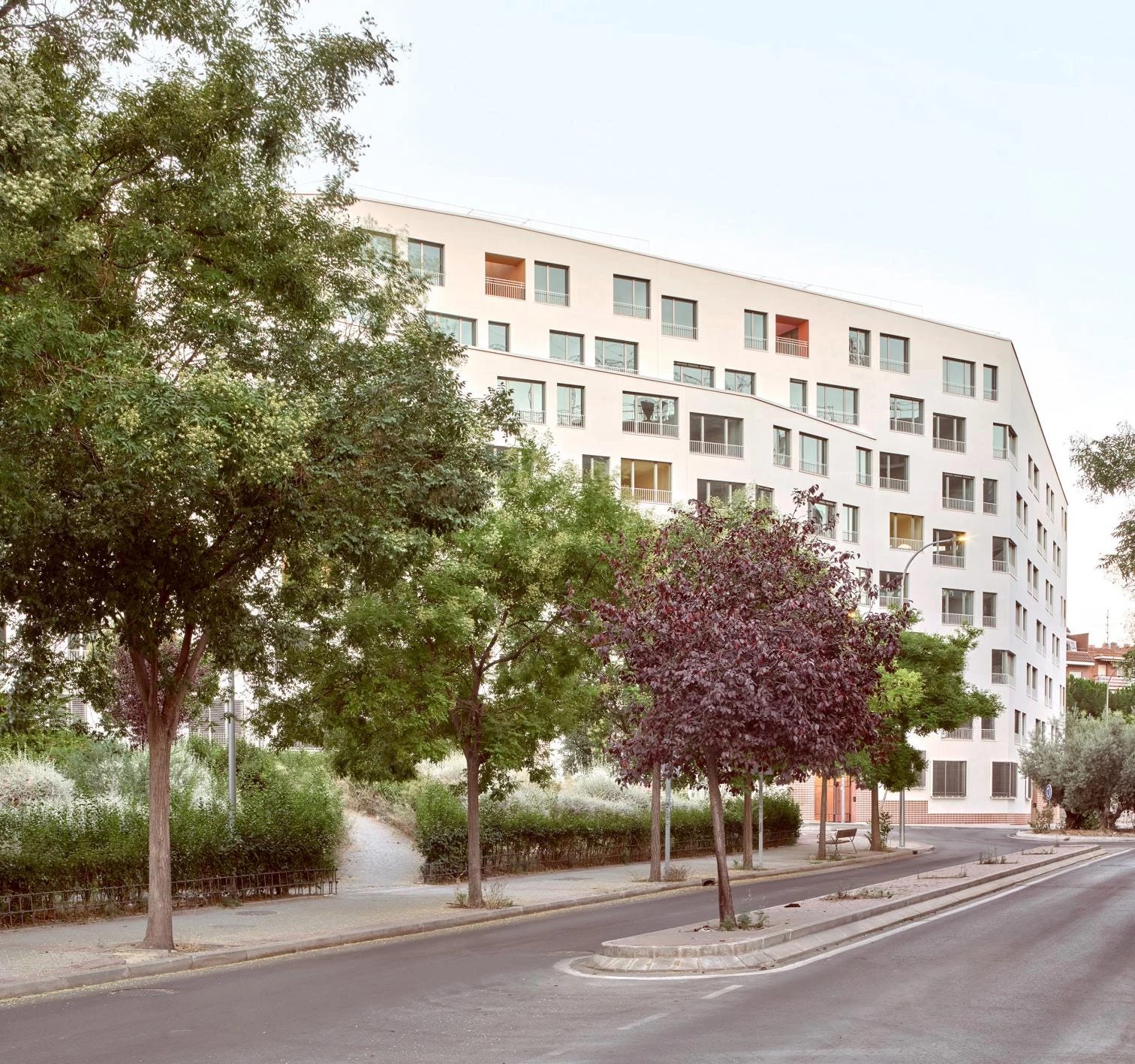
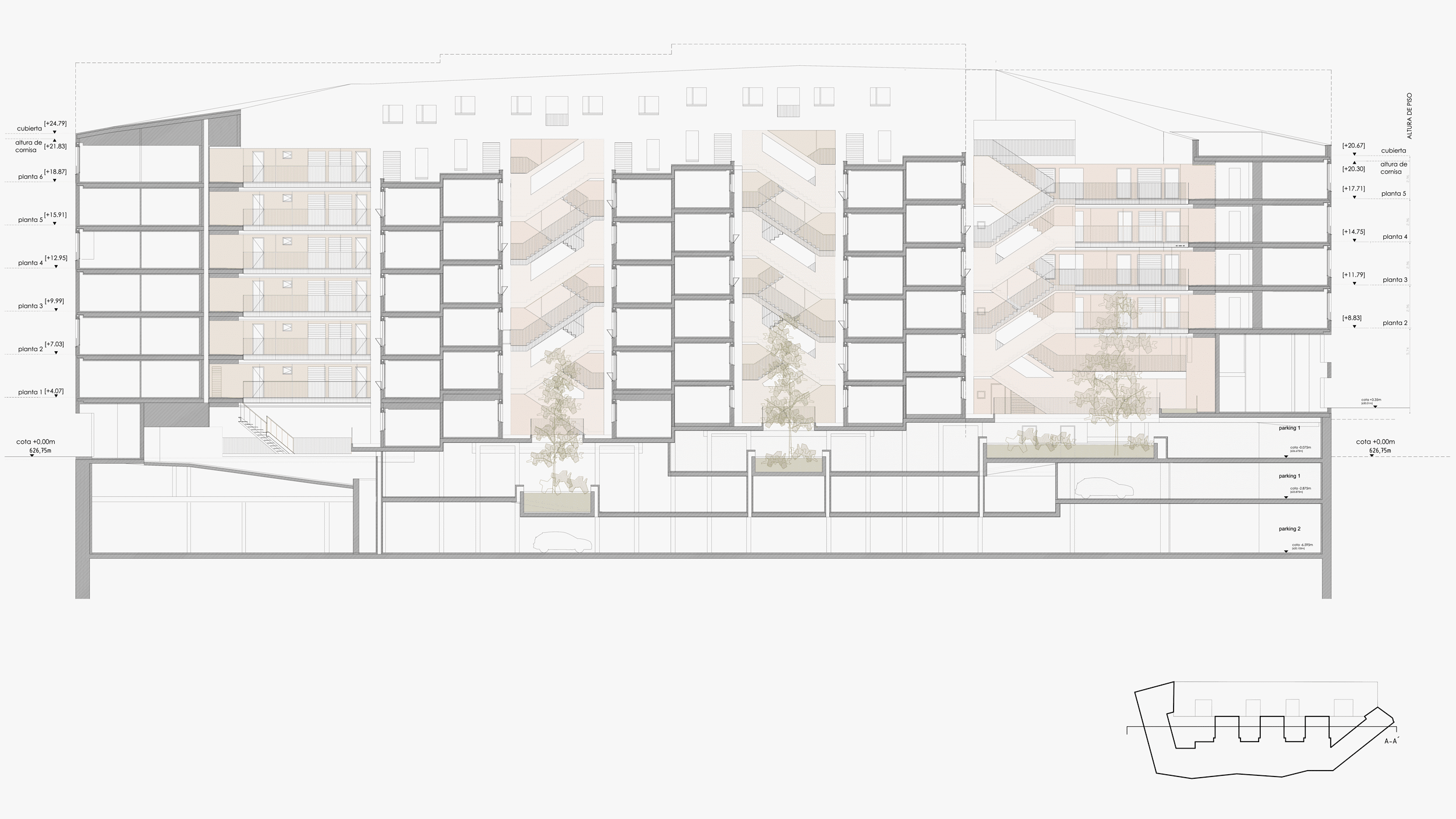
I’ve been taken with this project since I saw Marina del Mármol present when I was at UVA back in 2021, the thing I love about it is that it is unabashed about its big-ness. It traverses a whole urban block with variety - the section through the project is especially cool - and it meets the ground with breeze-bricks, custom steel gates, and a wonderful mineral quality to the roof ballast, the concrete pavers, and the exposed concrete.
See more photos on Marmolbravo’s website and poke around, they have a lot of cool urban work.
READING
The Virginia Legislative Information System
It’s another VA legislative session
BY: TARO MATSUNO
Virginia’s 2026 legislative session is underway with several housing bills in play:
Expedited approvals – HB594 allows cities and counties to authorize staff-level approval of affordable housing projects by zoning administrators.
Religious organization development – HB1279/SB367 enables staff-level approval of affordable housing on church-owned land and allows by-right development. We have our own “YIGBY” (Yes In God’s Backyard) projects in the works with Park Street Christian Church and Piedmont Housing Alliance, plus other congregations interested in developing land to advance their missions and allow them to make capital improvements.
Industrial development authority bonds – Bills enabling IDAs to raise bonds and promote housing development.
But HB804 is the one I’m watching most closely. It requires localities to plan for 7.5% housing growth over five years. Starting in 2033, developers can appeal decisions in localities that fail to meet these targets.
HB804 follows California’s “builder’s remedy” and Massachusetts’ Chapter 40B—both use growth targets paired with developer appeals. Chapter 40B has produced over 35,000 affordable units since 1969. Beyond the numbers, it’s been a tool for inclusion, creating some of the only affordable housing in suburban and small-town Massachusetts.
These bills always face the accusation that they undermine local control and are antidemocratic, but I’ve come to see it differently: if voters send a message at the state level that they want more affordable housing, counties and municipalities shouldn’t be able to block that with no voter recourse. If Virginians want affordability, each locality should do its part to make that a reality.
In the end some land use decisions might be best handled at the state level – Massachusetts has one of the most fragmented governance structures which leaves it unable to deal with the fact that housing is a regional phenomenon. Housing costs in Charlottesville and Albemarle are surely affecting families in Lake Monticello, Waynesboro, and Louisa, but only higher levels of government can make them work together.
WORKING
Externship Reflections by UVA Third Year Philippe Hempel
Getting Boots on the Ground- Literally
BY: KENDALL KING
From January 7-9, UVA Third Year Philippe Hempel joined us at the brwarchitects’ office, and on several site visits, as part of an “externship” facilitated by the Architecture School. You can read reflections from his packed three-day schedule below, and learn more about Philippe’s work on his website: https://philippehempel.framer.website/
"Over winter break, I swapped my sketchbook for a pair of boots and got a glimpse into the world that exists after the drawings are complete.
At the UVA School of Architecture, most of our time is spent in the design process: testing ideas, iterating, refining, sometimes starting over from scratch. That focus on exploration is one of the things I value most about the A-School. But studio ends at the drawing board. What happens after that—when those ideas start becoming physical buildings—is something we rarely get exposed to.
That curiosity has been sitting with me for a while. Before I transferred to UVA, I earned an associate degree in computer-aided drafting and design. That provided me with a solid technical foundation and introduced me to the professional tools of the trade, but it also left me with more significant questions. What does coordination between disciplines actually look like in real time? How are decisions made when construction starts? Where do clients, zoning laws, and permitting fit into the creative process?
This winter, I finally had the chance to find out.
I externed for a few days with brwarchitects in Charlottesville, and from the moment I arrived, the team made it clear: they wanted me to see it all. Not just the polished renderings or finished projects, but the moving parts behind them—the conversations, constraints, and coordination. What I walked away with was a more complete and grounded understanding of what it actually means to practice architecture.
Day One: Seeing the Whole Picture
We started off with a deep dive into BRW’s work. The firm’s range is broad and includes single-family homes, multifamily housing, commercial spaces, and institutional projects. I spent much of the day shadowing team members as they moved across these different archetypes and scales. What struck me wasn’t just the variety of work but the flow of energy in the office. Conversations overlapped, roles blended, and collaboration wasn’t just a buzzword—it was built into the culture.
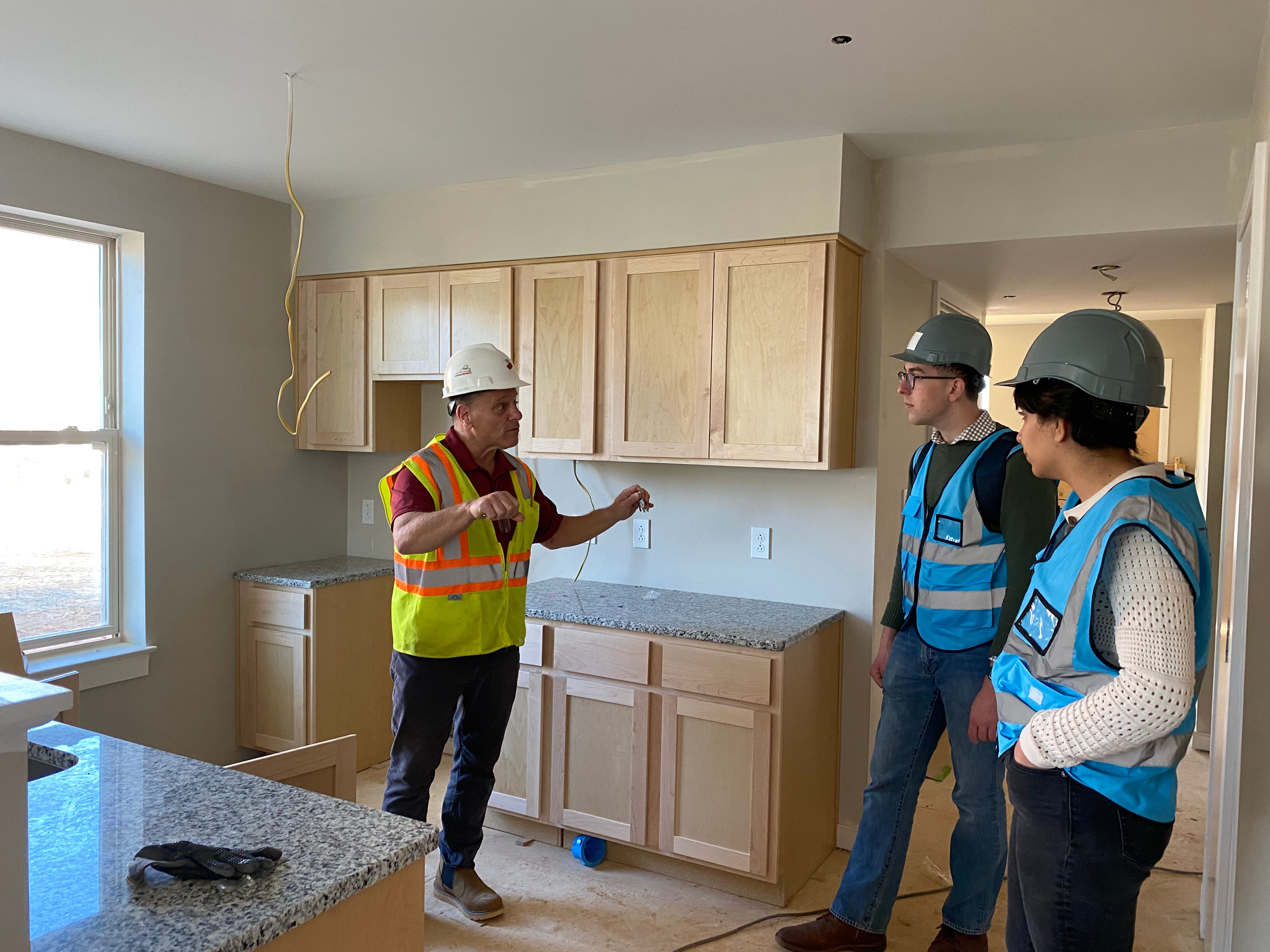
Later that day, we visited active and completed sites, including a multifamily development under construction and several finished commercial projects near and along the Downtown Mall. It was one thing to see drawings on a screen and something entirely else to walk the spaces and see how those drawings had translated to something physical.
Day Two: Beyond Designing
We kicked things off with another site visit, this time to a multifamily development north of Charlottesville. Then came one of the highlights of the externship: sitting in on an OAC (Owner, Architect, Contractor) meeting. Watching those dynamics play out in real time showed me how much architectural responsibility extends beyond design through negotiation, problem-solving, and real-time decision-making.
Later, I visited the City of Charlottesville’s Neighborhood Development Services office, where I gained a front-row view of the public processes that shape every project. From zoning to permitting to affordability requirements, I started to understand how the built environment is a negotiation between vision and regulation. It’s not just about aesthetics but rather about working within real-world constraints, thoughtfully and intentionally.
Day Three: All About Collaboration
The final day focused on collaboration, specifically, how architects work with other disciplines to bring a vision to life. I spent the morning with two of BRW’s regular partners: Line + Grade, a civil and landscape engineering firm, and Dunbar, a structural engineering firm. Both conversations were eye-opening. I saw how architects don’t just pitch ideas but rather translate them, adapt them, and strengthen them through interdisciplinary dialogue.


The day wrapped up with a portfolio review attended by several BRW team members. We didn’t just talk about aesthetics or presentation. We talked about narrative and discussed how my projects connect across scales and how my tendency to integrate systems, user experience, and landscape shapes the way I design. The feedback I received was practical and generous, and it helped me see ways to better communicate what drives my work.
Stepping back, this externship gave me more than just answers to my questions. It gave me a vision of the kind of professional environment I hope to be part of one day. Every conversation at BRW was insightful and eye-opening, not just expanding on what gets taught in studio but also the more complete process and people behind it all.
I’m deeply grateful to the entire BRW team for opening their doors, sharing their time, and helping me connect the dots between what we draw in school and what it takes to build in the real world.”
